In the factory inspection process of electric hoists, running speed testing is an essential step. The operating speed of an electric hoist refers to its lateral movement speed on an I-beam track. To ensure that the equipment runs smoothly and meets efficiency standards during use, actual testing must be conducted on an I-beam track under rated voltage, rated frequency, and rated lifting capacity conditions.
Before testing, it is necessary to ensure that the track is flat and clean to avoid impurities on the surface of the track causing deviations in operating speed. At the same time, the mid span static deflection of the track should be controlled within L/1000 (where L is the distance between the track supports), which is an important prerequisite for ensuring the accuracy of the test.
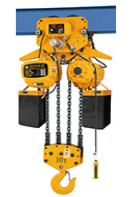
The specific testing method is to select two points on the track that are not less than 2 meters apart and mark them separately. Start the electric hoist to operate normally under rated conditions. The timing starts when the gourd reaches the first marker point and ends when it reaches the second marker point. The running speed can be calculated by recording the time and distance. To ensure accurate data, this test should be repeated four times, and the arithmetic mean should be taken as the actual running speed.
According to general standards, the operating speed of electric hoists is usually 20 m/min or 30 m/min. As long as the test results fall within this range, it can be considered that the operating speed of the electric hoist meets the requirements and its performance is reliable.
Through the above standardized testing process, it can effectively ensure that the electric hoist meets the design standards before leaving the factory, providing a basic guarantee for its subsequent safe and stable operation.

